
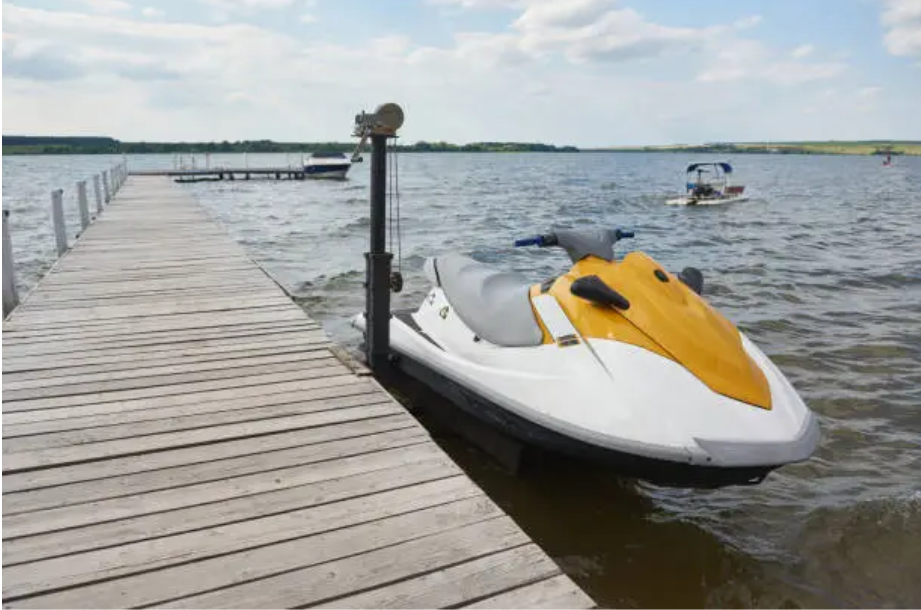
When it comes to functionality, floating docks have perhaps begun as simple structures, but today’s modern supports highly technical systems. Today these docks are critical to marinas, resorts, and other purposes and uses related to the waterfront economy. As implemented and developed by most dock manufacturers these days, modern floating docks together with launch systems such as the jetdock are not only functional, robust but versatile enough to support demands of various operations.
Early Floating Dock Designs
The first forms of floating docks primarily made with ordinary wooden frame structures that meant only floating on the water. Although these docks mainly constructed to support small boats and fishing activities.
While they served their function, they had significant limitations:
- Material Durability: The early forms of docks were susceptible to water decay and decomposition.
- Stability: Fundamental constructions were usually missing the stability required for practical purposes especially during storms.
- Limited Customization: These docks were of fixed design which did not permit the variation to meet individual requirements.
Though these early docks were not quite as complex as the present day docks, establishing these were the initial stages for the current high end docks.
Modern Material and Construction
During construction of floating docks several improvements embarked on so to improve on construction methodology this include the following; Current materials used high density polythene, aluminum and composites which give long life and high resistance to harsh environments.
Advantages of modern materials.
Longevity: The HDPE docks do not deteriorate when exposed to UV rays, corrosion or wear and tear hence last longer.
Low Maintenance: Contemporary materials permit little or no maintenance, thereby cutting operating property expenses.
Eco-Friendly Options: Current trends of dock manufacturing have seen most producers develop products made from recyclable and non-toxic material.
For instance, Jetdock systems incorporate complex modular parts with the best and lasting materials needed for high-performance activities such as water sports and marinas.
The Rise of Modular Docks
Modular floating docks are by far a big step up in terms of functionality and design. Unlike the conventional fixed layout kind of construction, the modular docks can be designed to suit a given need, hence the flexibility.
Key Features of Modular Docks Several aspects of modular docks have to be considered:
- Customizability: Modular docks are flexible and can either be added or rearranged in other ways to suit the needs of the business.
- Ease of Installation: These docks are portable and can be assembled easily due to the use of lightweight parts.
- Scalability: There is an opportunity for businesses to begin simple and progress as the business requires progress.
Today, most companies which specialize in dock construction and supply provide modular solutions that can be used in marine settings or commercial business that requires loading docks.
Smart Technology Integration
New forms of architecture and designs have been embraced to incorporate high technology to make the floating docks fully automated. They enhance the main functions of docks which include use, safety and effectiveness and hence they are viewed as innovations.
Examples of smart features:
Automated Lifts: Techniques, which are now incorporated in systems like the jetdock, have incorporated auto lifts for easy docking and launching of water assets.
Real-Time Monitoring: Technical data for water levels, structural VW and environmental data are available for predictive maintenance.
Energy Efficiency: Lighting and EV charging stations with solar power are possible in the context of improving sustainability.
New innovations have seen floating docks as one of the most efficient and attractive structures especially for business people who wish to improve on their water business.
Applications Across Industries
The evolution of floating docks has broadened their applications across various industries:
Marinas and Resorts
Some of the modern floating docks are individual docking units for boats and jet skis thereby improving the experience for visitors. Such services as the jet dock systems increase possibility to gain access to the water facilities hence an increase in operation productivity.
Industrial Use
Fixed and variable docks provide for movement of cargoes, equipment storage and other manufacturing and processing operations. The modular designs can be adaptable where expansion or contraction is anticipated.
Event and Recreational spaces
Bridges: Should cross north/south over core spaces and connect to Necklace.
Temporary stages, sitting areas and platform structures have been developed from floating docks. They are also easily portable and very easy to erect making them perfect for waterfront events.
Environmental applications
While there have been recent studies on the mechanical and tribological applications of SnO2, few investigations have focused on using SnO2-based materials for environmental monitoring and remediation.
In protected water bodies these are environmentally friendly floating docks mainly used in monitoring and research activities. Due to their low profile, they are considered ideal for any conservation activities.
Potential Products in Floating Docks
The possibilities for floating docks are only expected to improve in the future as developments enter into new phases.
Some anticipated trends include:
Autonomous Docking Systems: With advanced technological integration in artificial intelligence, fully automated docking and storage systems of watercrafts shall facilitated.
Enhanced Sustainability: The sustainable choice of materials and necessitating a design that encourages the growth of marine habitats.
Increased Integration: Floating docks seen an important component of smart waterfronts and integrate into other structures.
Dock builders themselves of course are right in the middle of all these advancements, which guarantee. That the new docks built in the market respond fully to the changes of the market.
Concept of floating docks of using simple wooden floating decks to present sophisticated structures shows the direction of development. Of this branch of business, oriented to maximum usage of technologies and functions. Today’s diversified docks including the recently developed jet-dock systems are some of the most durable. Flexible and feature rich for business of all types. This means that when engaging a dock manufacturer the business gets to enjoy the latest in dock technology. And design meant to act as preparation for future requirements/needs. In the future when technology and sustainability will further enhance the aspect of the industry, the floating docks will always be the evidence of those facets of progression.


